Combating Deflation - Option I The Keynesian Prescription

Combating Deflation
In a previous Hub, Deflation - What is It and Why are We Worried About It?, I described what inflation was and why it was a problem. In this Hub I will describe the first of the two main economic theories for combating deflation.
While there are many things, including the tendency of wages not to fall during periods of deflation, the biggest problem with deflation appears to be fear and uncertainty on the part of consumers and businesses.
Employers and potential employers look at the high costs associated with hiring and paying the workers needed to expand their output and fear that the sale of the increased output won’t cover that added cost.
Investors fear that declining asset values will erode the value of any investment they make so they refrain from investing.
Banks fear that the value of the assets backing loans will depreciate causing them to lose money if the borrowers default leaving the banks with assets whose sale price is less than the amount of the loans.
Left to itself, the market will eventually adjust and stabilize. However, not wanting to wait for the market to adjust, many people look to the government to do something to pull the economy out of the recession.
The Keynesian Approach to Fighting Deflation
In recent times there have been two basic ways in which government has dealt with major economic downturns and accompanying deflation. One way is to focus on aggregate demand in an attempt to get aggregate demand to increase by encouraging consumer spending. The other way is to focus on aggregate supply by getting businesses and individuals to invest and expand output.
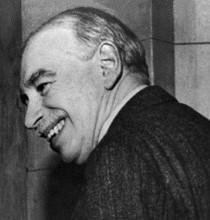
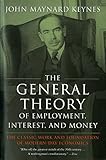
The first way, focusing on aggregate demand, relies heavily on the theories of the late British economist John Maynard Keynes (Lord Keynes as he was rewarded with a peerage by King George VI in June of 1942 and given title Baron Keynes of Tilton) and his followers.
Keynesian Theory Focuses on Aggregate Demand
Believing that businesses are not hiring and expanding their output due to a lack of demand for their products, Keynesian theory seeks to stimulate spending on goods and services.
The two major policy approaches
favored by Keynes was an expansionary fiscal policy in which the
government borrowed and spent heavily and a monetary policy that
favored tax cuts and expansion of the money supply.
According
to Keynes, it didn’t matter what the government spent money on as the
objective was to get money into the economy quickly. The idea here was
that the manufacturers and sellers of the goods and services purchased
by the government would see demand for their goods and services rise
and be forced to hire more workers. In turn, these new workers would
spend their paychecks which would stimulate more business to increase
production and hire more people.
This
is known as the multiplier effect which basically states that the
re-spending of the government dollars would magnify the effect of each
dollar of government spending so that the effect of a $1 increase in
government spending would result in a $4 or $5 or more effect on
aggregate demand. This increase in aggregate demand comes from the
fact that every time someone spends money that money becomes income to
someone else who can now afford to spend money.
The
idea behind this was to increase the supply of money in circulation
through spending. The government borrows idle cash and injects it back
into circulation through its spending. The subsequent re-spending of
that cash by newly hired workers would keep it in circulation thereby
easing the shortage of money in circulation.
As aggregate demand increases, according to the theory, businesses and consumers regain confidence and begin spending the cash they have been holding thereby restoring equilibrium to the economy.
Goal of Keynesian Policies is to Restore the Economic Status Quo
According to Keynes’s theory it is essential that the increased government spending be financed through borrowing and not by raising taxes as the goal is to get consumers, who are also taxpayers, to spend their money.
Raising taxes in this situation, according to Keynes, would reduce
cash already in the hands of consumers thereby reducing their incomes
and ability to spend money. Thus, government stimulus spending is just
that, a way to stimulate spending in general by putting money into the
hands of consumers who will spend it.
Keynesian
theory also called for tax cuts either as an alternative to increased
government spending or as a second means of putting more money into
consumers’ pockets.
As I explained in my Hub Democrat vs Republican Tax Cuts,
the purpose of Keynesian style tax cuts is to stimulate consumption
spending not investment spending and, because of this, they target the
lower income tax brackets rather than the higher brackets. The
recipients of these tax cuts are mainly lower income people who, by
necessity, are forced to spend all or most of their income on
consumption.
Keynes
was not worried about creating new jobs or expanding the productive
base of the economy but rather was concerned about getting the existing
factories, farms and mines that were sitting idle or were underutilized
as a result of the deflationary downturn back to full production and
having them rehire the laid off workers.
Keynesian Theory and Big Government
Among
the major flaws in the Keynesian theory is its static view of the
economy. The goal of the theory is to restore the economy to its
pre-crash status with incomes, profits, market shares, etc. back to the
way they were before the crash. The problem is that the market is
dynamic and a major cause of major economic downturns are usually due
in large part to structural changes that are occurring in the economy.
.
Of
course, those who stand to lose the most during a market change are
established firms and organizations that are doing well under the
existing status quo, and it is in their best interest to use the wealth
and resources at their disposal to fight the pending changes. They
thus become what are known in political circles as special interests as they lobby and support politicians in exchange for laws intended to protect them from change.
The
focus on preserving the economic status quo, combined with politicians’
natural inclination to implement and manage tax and spending policies
in a manner intended to induce voters to re-elect them is a major
reason why policies based upon Keynesian theory fail to pull economies
out of major economic declines.

Keynesian Policies Have Not Worked in Practice
Recent history has many examples of the failure of Keynesian policies in combating deflation.
We can start with the current Obama Administration’s use of Keynesian policies to no avail for the past two years. Despite the government’s record spending in an attempt to pull the economy out of the present recession and reverse the deflationary spiral, unemployment is rising, new business starts have slowed to a trickle, existing businesses are still laying off, weaker firms are closing entirely and the talk of deflation is being heard with greater frequency in both financial media as well as a front page topic in regular news accounts.
While the United States, and other nations using Keynesian policies, have been struggling with recession and deflation for the past two to three years, Japan has been battling a severe deflation since the 1990s and still has not pulled its economy out of its downward deflationary spiral. One commentator recently quipped that the Japanese hold the record for the longest running failed Keynesian experiment.
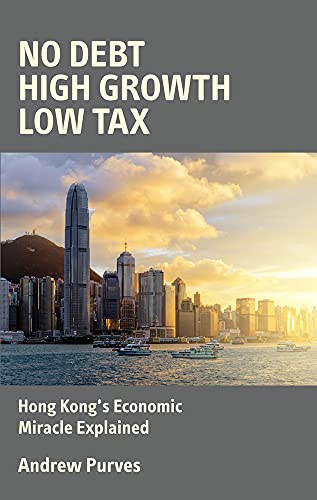
In the immediate post World War II period we have the case of Hong Kong and Great Britain. Until its transfer to China on July 1, 1997, Hong Kong was a British colony. Prior to World War II, it was a minor trading outpost in the British Empire. During World War II, Hong Kong was invaded and occupied by Japanese troops. When the war ended the Japanese troops left but Britain, exhausted by the war and occupied with problems at home and other parts of the empire, put Hong Kong way down on its list of priorities.
Thus, in the immediate aftermath of the war, Hong Kong found itself with practically no functioning government and a laissez-faire, free market economy. Britain eventually got around to dispatching John James Cowperthwaite to Hong Kong as Financial Secretary for the colony with orders to repair the war torn economy of that colony.
However, when Cowperthwaite arrived he found the economy running smoothly and well on its way to recovery. Seeing how well the laissez-faire model was working, Sir John (he was later knighted by Queen Elizabeth for his services) spent his entire career as Financial Secretary keeping the government out of the colony’s economy.
Cowperthwaite’s free market policies turned Hong Kong, a relatively tiny speck of real estate in the Far East, into one of the world’s leading economies. At the same time Great Britain, the mother country, languished during the postwar years as successive governments pursued Keynesian policies.

It wasn’t until 1979 when Margaret Thatcher became Prime Minister and reversed the Keynesian policies that the British economy moved from near third world status to that of a major economic force again.
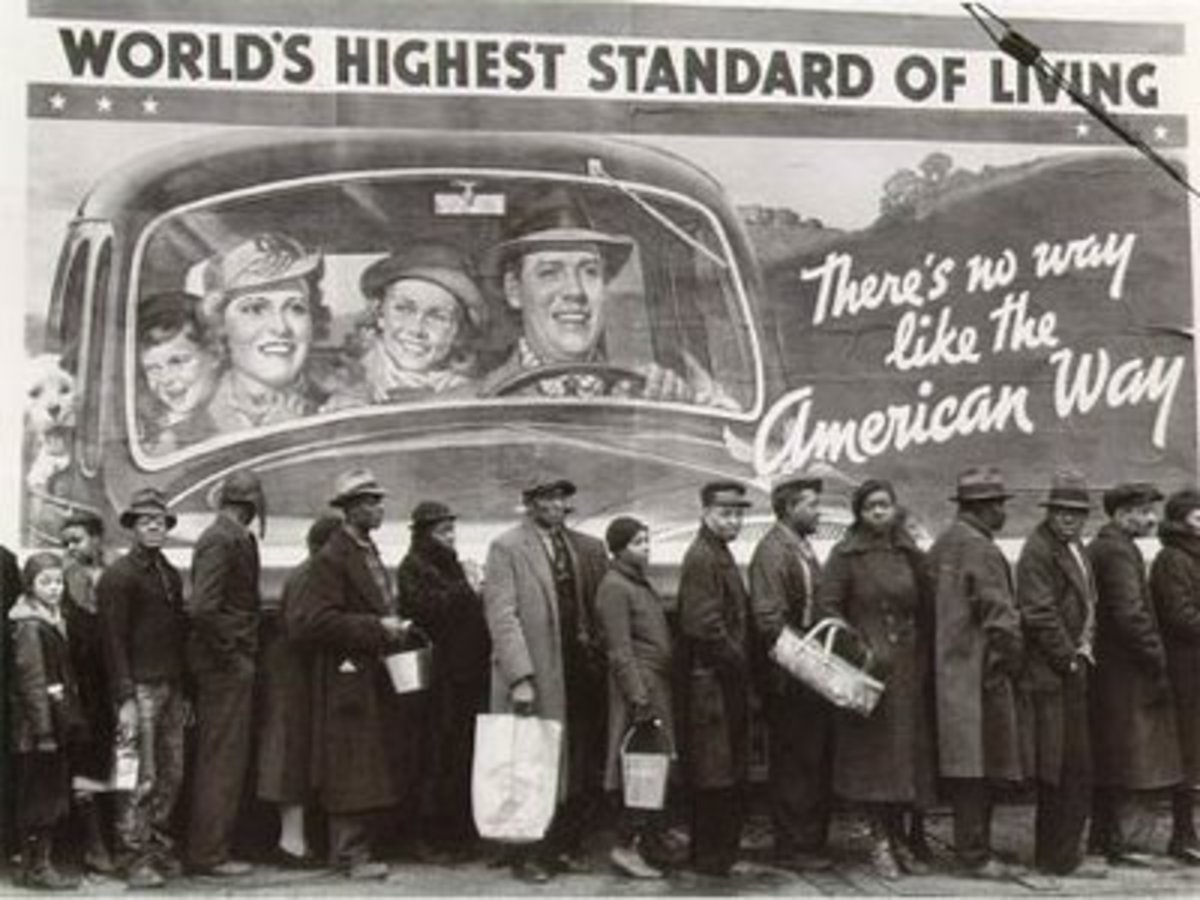
Then there was the Great Depression of the 1930s which dragged on for nearly two decades as the Administration of Franklin Roosevelt struggled in vain fighting it with Keynesian economic policies. It wasn’t until after the death of President Roosevelt when, first the Democratic Congress and then the Republicans who took control of the Presidency and Senate began cutting back on New Deal programs and cutting taxes that the Depression finally ended.
Finally, there was the short and mostly forgotten post-World War I Recession of 1920-21. This recession is basically a historical footnote remembered mainly by supply side and libertarian economists.
The deflation and depression of 1920-21 was short lived due to the laissez-faire and tax cutting policies of Treasury Secretary Andrew Mellon and Presidents Harding and Coolidge (who became President in 1923 upon Harding’s sudden death).
Theories of John Maynard Keynes Have Not Proved Useful in Combating Deflation
Thus, despite its apparent logic, Keynesian economic theory and the policies prescribed by it has a poor record in combating deflation and their accompanying depressions.